Ultra-high Resource Efficiency in integrated Biomass & Power-to-methanol Plant: techno economics, flexibility and digitalisation
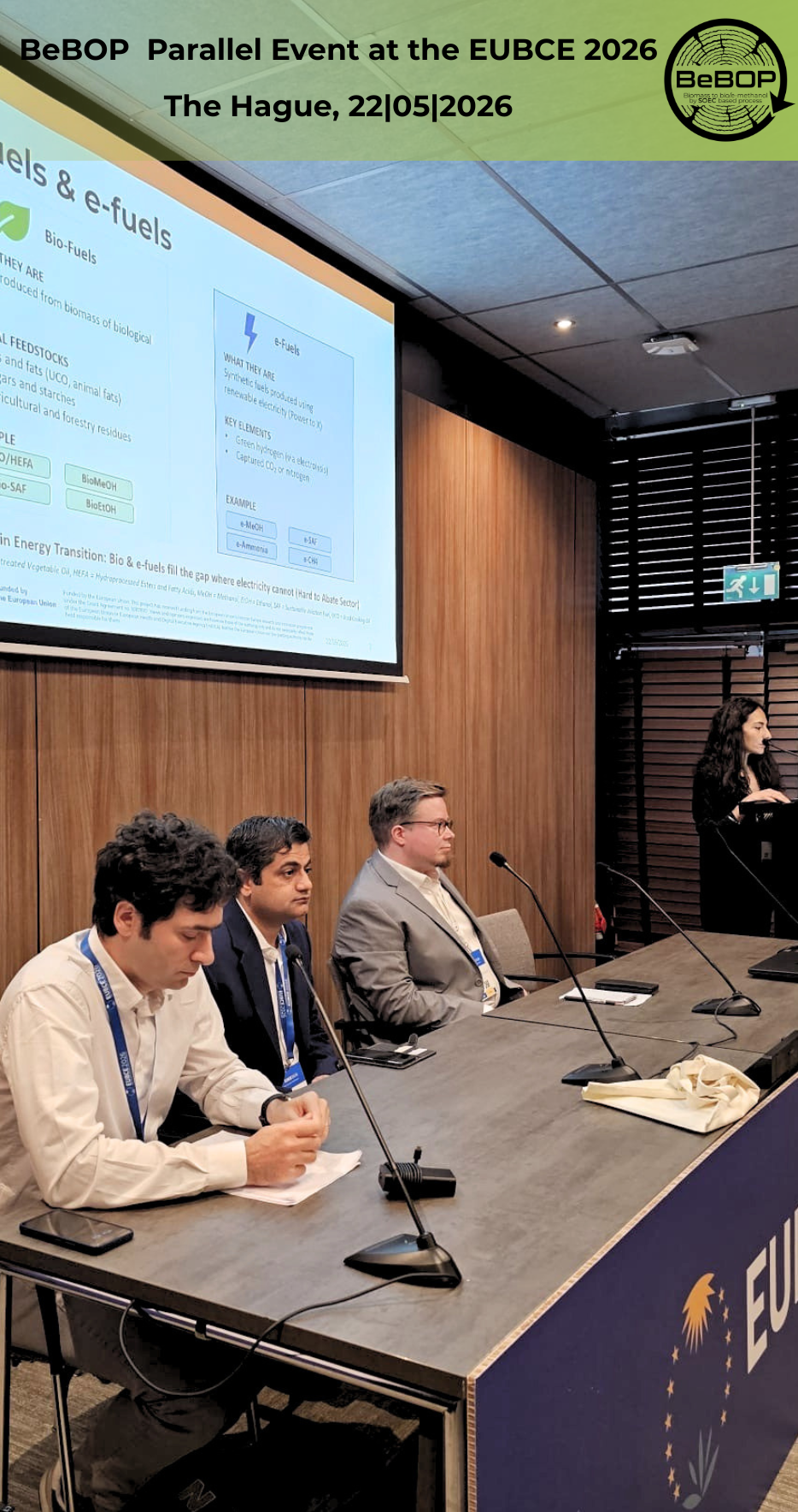
THE HAGUE, NETHERLANDS — Last week, the EU-funded BeBOP project hosted a highly successful parallel session at the 34th European Biomass Conference & Exhibition (EUBCE 2026). Gathering international bioeconomy leaders, researchers, and industrial stakeholders in Room North America, the event provided a transparent look at the project’s first 18 months of development, its current implementation status, and the technical pathways driving its innovative e-methanol solution.
Conventional biomass-to-methanol pathways face a notable limitation in terms of costs and production. The BeBOP concept aims to completely redefine these operational limits. By integrating a Solid Oxide Electrolysis Cell (SOEC) with advanced syngas conditioning and a 3D-printed reactor, the project targets over 95% carbon efficiency, near-zero carbon losses, and production costs below €250/t.
Panel 1: Deconstructing the Technical Core
The session opened with a deeply technical panel focused on the engineering foundations of the upcoming TRL6 pilot plant, which will be hosted at the VTT Research Centre in Finland.
- The Scale-Up Landscape: Alessandra Pizzilli (Wood Italiana srl) presented a market outlook on advanced e-fuels, analyzing the current energy transition alongside the specific economic and infrastructural barriers that delay industrial-scale rollouts.
- Techno-Economic Motivations: the Scientific Coordinator Matteo Romano (Politecnico di Milano) welcomed attendees and laid out the macroeconomic case for the project, emphasizing process intensification and grid-flexibility as primary enablers for modernizing the chemical sector.
- Extreme Process Integration: Muddasser Inayat (VTT) shared first-look engineering data detailing the plant’s multi-product flexibility and its unique ability to double conventional methanol productivity from biomass feedstocks.
- Digital Twin Optimization: Antti Pitkäoja (LUT University) concluded the technical presentations by addressing the opportunities and computational challenges of developing the project’s Digital Twin, explaining how real-time simulation models will dictate operational flexibility strategies in response to volatile power grids.
Panel 2: Designing the Future Market Integration
The second half of the session shifted into a structured, interactive debate led by Chair Francesco Croci (Wood Italiana srl) and Co-Chair Matteo Romano. Moving away from traditional presentation formats, this panel engaged the audience in a real-world feasibility critique across several high-priority commercial pillars.